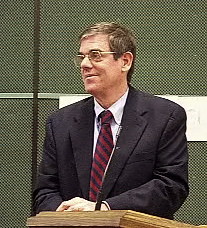
Geologist (and Smith professor) Robert Newton has studied the Barnes Aquifer extensively in his role as a member of BAPAC--the Barnes Aquifer Protection Advisory Committee. BAPAC operates under the aegis of the Pioneer Valley Planning Commission, and is charged with evaluating, and providing input, on projects that might impact the aquifer, which provides drinking water for Easthampton, Southam[otn, Holyoke, and Westfield.
Northampton is proposing a significant expansion of its existing landfill, which accepts trash from 44 towns, to extend its life for another 20 years. The Department of Environmental Protection (AKA the Executive Office of Energy and Environmental Affairs, EOEA) has determined that the landfill is situated over a recharge area for the Barnes Aquifer. DEP regs prohibit landfills over aquifer recharge areas--yet it has waived these regulations for the city of Northampton.
Dr. Newton asserts that existing studies on the landfill--including the STANTEC report-- are inadequate or flawed.
The landfill expansion will require a special permit from the Northampton City Council, which must give super-majority (2/3) approval.
Dr. Newton explains that an aquifer recharge area consists of gravely, sandy soils that are permeable to rainwater. The Maloney well is surrounded by impermeable clay-based soils, and is recharged from distant locations, which include the existing landfill area.
Three landfills up-gradient from the Maloney well are producing leachate, according to Newton. (Two of these, located in Easthampton, have been decommissioned.) Newton cites evidence that contamination from the landfill has been steadily increasing since 1992.
Newton explained that landfill leachate reduces dissolved oxygen in the groundwater, which precipitates iron and manganese (creating "flocculant" surface water, such as seen in the orange-toned Hannum Brook), and can mobilize naturally-occuring arsenic in rocks. In the scientific literature, iron/manganese flocculance and arsenic contamination are highly related. Western Mass is one area of New England with a high concentration of arsenic-containing rocks. One domestic well downgradient from the landfill has already tested positive for arsenic.
The Maloney well is borderline in its concentration of iron and manganese. Newton argues that pushing more of these metals into the well--and potentially arsenic--is not the answer. It might take 25-50 years for the effects of leachate on groundwater to become apparent. Are we mortgaging our future for a quick, temporary fix?
EOEA # 12351
Showing posts with label planning board. Show all posts
Showing posts with label planning board. Show all posts
Monday, April 21, 2008
Geologist Robert Newton: Landfill Leachate & the Maloney Well


Tuesday, November 13, 2007
best practice *this*
Here's a familiar voice from the recent past, reminding the good citizens of greater Northampton of the political events of summer '07....if nothing else, noho and hamp gained common ground. Will that common ground be honored in the "best practices" movement?
Get your own playlist at snapdrive.net!
Subscribe to:
Posts (Atom)

